


ARRIVING SOON
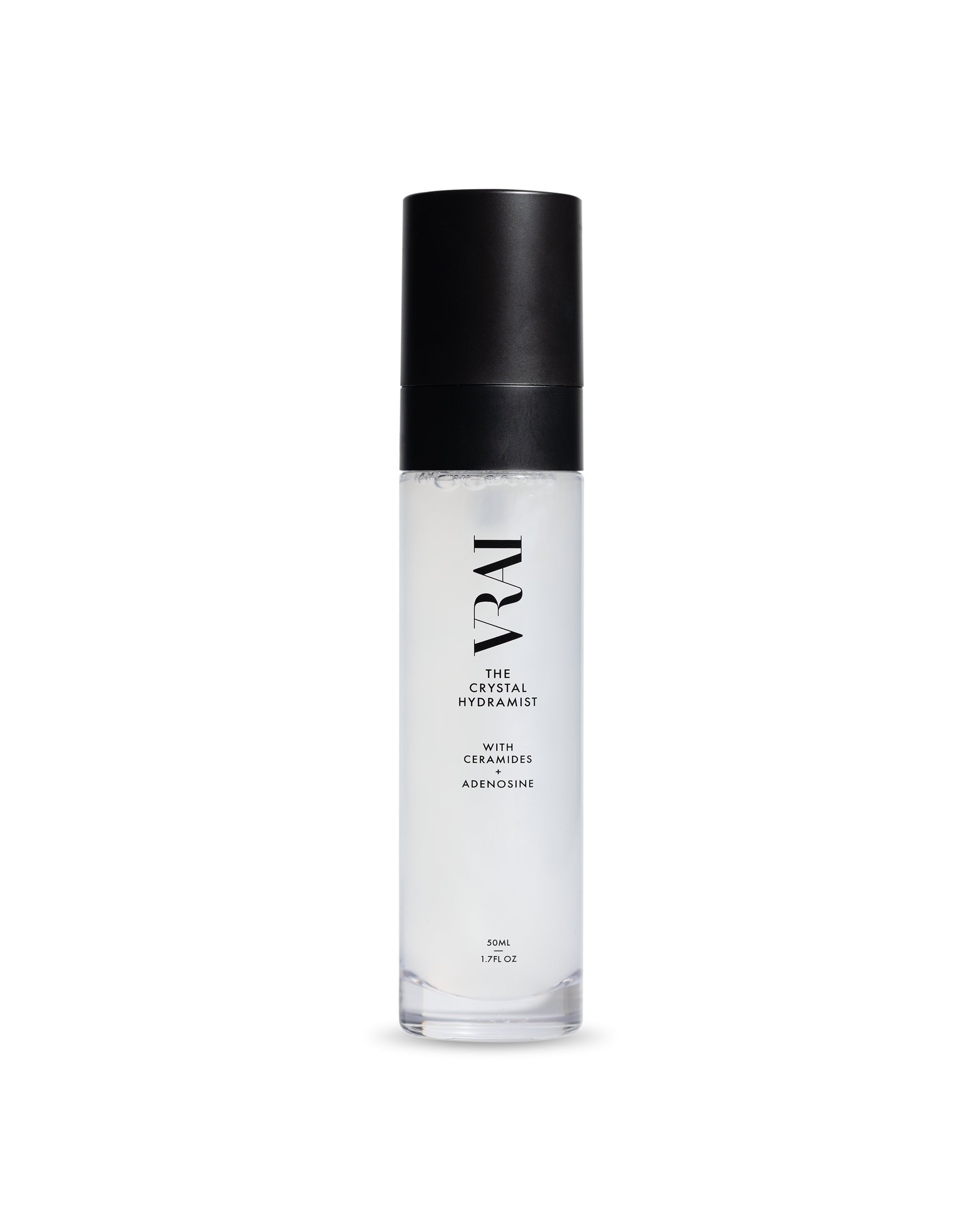
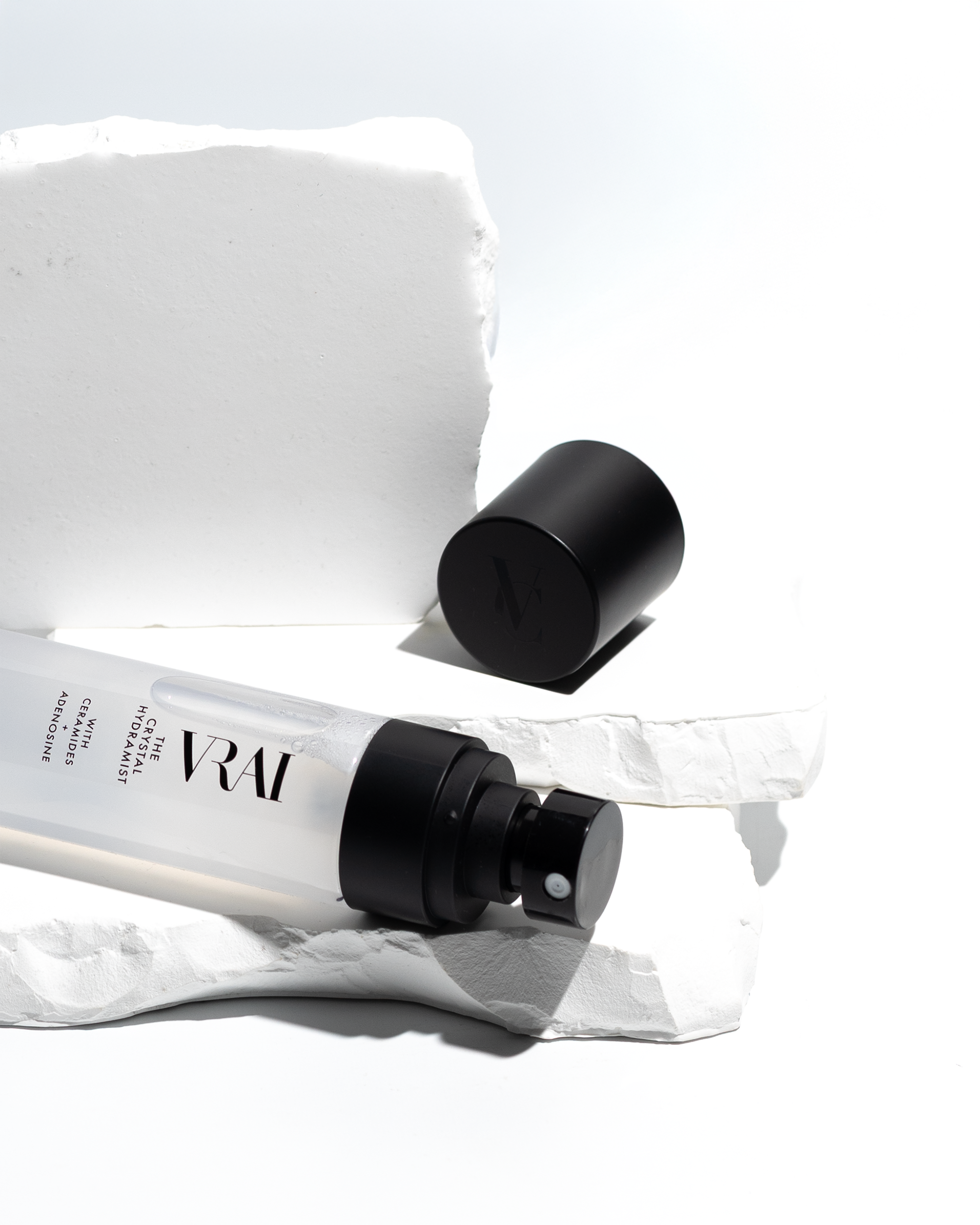
The Crystal Hydramist
Prep. Hydrate. Revive.
A weightless veil of intelligent hydration that replenishes moisture and helps support the skin’s barrier. An ultra-fine infusion of Ceramide NP and precision-dosed Adenosine designed to move seamlessly between skincare and makeup.
Mist before moisturizer to prepare the skin, over finished makeup to refresh the complexion, or throughout the day whenever skin needs renewed hydration.
This formula hydrates, balances surface pH, refreshes the complexion.
May be worn under, or over makeup.
Ultra-Fine Mist spray
Fragrance Free
NET WT
50ML / 1.7FL OZ
INGREDIENTS
WATER (AQUA), GLYCERIN, PROPANEDIOL, 1,2-HEXANEDIOL, BETAINE, BUTYLENE GLYCOL, HYDROGENATED LECITHIN, GLYCERYL STEARATE, PANTHENOL, SODIUM CITRATE, ETHYLHEXLGLYCERIN, ADENOSINE, CERAMIDE NP, CITRIC ACID, XANTHAN GUM
HOW TO USE
MORNING
Use as the foundational skincare step to prime and balance the skin after cleansing. Apply over makeup to set the finish and protect hydration.
ALL DAY
Mist throughout the day to replenish the skin and refresh your complexion
EVENING
Use as the foundational skincare step to prime and balance the skin after cleansing
Choose options
INSIDE THIS PRODUCT
DESCRIPTION & DETAILS
Spray The Crystal Hydramist onto the face, and décolletage, holding the bottle seven inches away or more from skin.
Apply as a first and or last step in your skincare / cosmetics routine and throughout the day as needed to replenish.
MORNING
Use as the foundational skincare step to prime and balance the skin after cleansing. Apply over makeup to set the finish and protect hydration.
ALL DAY
Mist throughout the day to replenish the skin and refresh your complexion
EVENING
Use as the foundational skincare step to prime and balance the skin after cleansing
Skin feels freshly hydrated, soft and comfortable beneath a weightless, ultra-fine veil. The complexion appears revived, supple and naturally luminous.
NET WT
50 ML / 1.7 FL OZ
IDEAL FOR
Supporting the moisture barrier, replenishing hydration, preparing skin for skincare, and refreshing the appearance of finished makeup.
INGREDIENT INTELLIGENCE
VRAI IQ
Purified water acts as the primary solvent and delivery medium within The Crystal Hydramist. It creates the fluid phase of the formula, allowing water-soluble ingredients to dissolve or disperse evenly and giving the product its weightless mist application.
ORIGIN / MANUFACTURE:
Water used in cosmetic manufacturing is purified and controlled to meet defined chemical and microbiological specifications.
WITHOUT EXCEPTIONS INGREDIENT
VRAI IQ:
Water may seem like the most basic ingredient in a formula, but in a water-based cosmetic, water quality matters significantly. Water can support microbial growth if manufacturing, purification, and preservation are not appropriately controlled. For this reason, FDA cosmetic GMP guidance specifically calls for water used as a cosmetic ingredient to be routinely tested against chemical and microbiological specifications, with finished products evaluated for adequate preservation. The question is not whether water itself is “safe”; it is whether the water and the formula containing it are properly controlled.
Glycerin is one of the most established and well-researched humectants used in skincare. It attracts and binds water, helping increase hydration within the outer layers of the skin while improving softness, suppleness, and the feel of dry or tight skin. In The Crystal Hydramist, it forms an important part of the multi-humectant hydration network.
ORIGIN / MANUFACTURE:
Glycerin may be produced from vegetable oils and fats, animal-derived fats, or synthetic manufacturing routes.
WITHOUT EXCEPTIONS INGREDIENT
VRAI IQ:
The safety and function of purified cosmetic glycerin are determined by the identity, purity, concentration, and use of the finished ingredient—not simply by whether its original carbon source came from a plant, animal, or synthetic process. The Cosmetic Ingredient Review has evaluated glycerin and concluded it is safe in cosmetics under its assessed conditions of use.
Glycerin is an excellent example of why ingredient origin and ingredient toxicology should not be treated as the same question.
Propanediol—specifically 1,3-propanediol—is a multifunctional humectant, solvent, and skin-conditioning ingredient. It helps increase hydration, improves the spread and sensory feel of a formula, assists in dissolving other ingredients, and can help optimize the delivery of certain ingredients within a formulation. It may also contribute to preservation efficiency depending on the complete preservative system.
It provides a light, elegant slip without the heavy or sticky feel that can occur when a formula relies too heavily on a single humectant.
ORIGIN / MANUFACTURE:
Propanediol can be manufactured through conventional synthesis or through biotechnology and fermentation of renewable feedstocks such as plant-derived sugars or glycerol.
WITHOUT EXCEPTIONS INGREDIENT
VRAI IQ:
Propanediol is a useful example of why VRAI IQ does not classify ingredients according to the words “synthetic,” “petroleum-derived,” or “natural.” The CIR Expert Panel evaluated 1,3-propanediol within its assessment of alkane diols and concluded it is safe in cosmetics under the assessed practices and concentrations of use.
WHAT ABOUT 1,4-DIOXANE?
Propanediol itself is not an ethoxylated ingredient.
FDA explains that 1,4-dioxane can occur as an unintended manufacturing byproduct of certain ethoxylated cosmetic ingredients, often recognizable by names containing terms such as PEG, polyethylene glycol, polyoxyethylene, “-eth-,” or “-oxynol-.” Propanediol does not belong to that chemical class. Therefore, the conventional ethoxylation-related 1,4-dioxane concern does not apply to propanediol itself.
This is more scientifically precise than saying a petroleum-derived ingredient is automatically contaminated—or that every ingredient made from petroleum has undergone the same manufacturing chemistry. It has not.
1,2-Hexanediol is a multifunctional glycol used as a solvent, humectant, skin-conditioning ingredient, and preservation-support ingredient. It contributes lightweight hydration and improves the distribution and sensory feel of a formulation.
It is particularly useful in modern preservation systems because it also demonstrates antimicrobial activity and can work alongside other preservation ingredients to help maintain microbiological stability. Research has demonstrated activity against both Gram-positive and Gram-negative bacteria and effects on bacterial membrane potential.
ORIGIN / MANUFACTURE:
1,2-Hexanediol is a synthetically manufactured ingredient, typically produced through controlled chemical synthesis using C6 chemical feedstocks.
WITHOUT EXCEPTIONS INGREDIENT
VRAI IQ:
1,2-Hexanediol is another example of a safe synthetic ingredient whose performance contributes to both formula experience and formula protection. The Cosmetic Ingredient Review evaluates it within the family of 1,2-glycols used in cosmetics.
1,2-Hexanediol is not an ethoxylated ingredient. Therefore, the conventional ethoxylation pathway associated with potential 1,4-dioxane formation does not apply to 1,2-hexanediol itself. FDA's guidance on 1,4-dioxane specifically distinguishes the manufacturing process associated with certain ethoxylated materials.
Betaine is a naturally occurring amino-acid derivative also known as trimethylglycine. In skincare it functions primarily as a humectant, osmolyte, and skin-conditioning ingredient, helping cells maintain water balance and supporting hydration without leaving the skin feeling heavy or coated.
ORIGIN / MANUFACTURE:
Betaine occurs naturally in plants, microorganisms, animals, and the human body. Commercial cosmetic betaine may be recovered from sugar-beet processing or manufactured through other synthetic or biotechnological routes.
WITHOUT EXCEPTIONS INGREDIENT
VRAI IQ:
An important distinction: Betaine is not Cocamidopropyl Betaine. They are different cosmetic ingredients with different structures and functions. Concerns associated with impurities or sensitization involving Cocamidopropyl Betaine should not automatically be assigned to Betaine simply because the names sound similar.
Research on betaine as an osmolyte has shown that topical exposure can influence tight-junction proteins including claudin-1, claudin-4, and occludin in human skin and keratinocyte models, supporting the scientific rationale for its role in epidermal water management and barrier function.
The CIR Expert Panel has evaluated Betaine within its assessment of alkyl betaines and concluded the group was safe under its assessed cosmetic-use conditions when formulated to be non-irritating.
Butylene Glycol serves as a humectant, solvent, and skin-conditioning ingredient. It helps increase water content at the skin's surface, assists in dissolving other formula components, and contributes to the smooth, lightweight feel of The Crystal Hydramist.
ORIGIN / MANUFACTURE:
Butylene Glycol can be manufactured through conventional chemical synthesis or through newer bio-based manufacturing routes using renewable carbohydrate feedstocks. The INCI name itself does not tell us whether a particular supplier's material originated from fossil or renewable carbon.
WITHOUT EXCEPTIONS INGREDIENT
VRAI IQ:
Butylene Glycol has sometimes been criticized simply because conventional manufacturing may begin with petrochemical feedstocks. That is not a toxicological assessment.
Once an ingredient has been chemically produced and purified, safety must be evaluated according to the finished molecule, its purity, contaminants, dose, route of exposure, and actual cosmetic use. PubChem's toxicology summary references CIR's conclusion that butylene glycol is safe under its assessed cosmetic practices and concentrations of use.
Hydrogenated Lecithin is a phospholipid-based skin-conditioning and emulsifying ingredient. It helps stabilize the relationship between water- and lipid-based ingredients and can support organized lipid structures within sophisticated skincare formulations.
Within The Crystal Hydramist, it is especially complementary to the barrier-support portion of the formula containing Ceramide NP.
ORIGIN / MANUFACTURE:
Lecithin may originate from plant or animal phospholipids—including commonly used plant sources such as soy or sunflower—and is subsequently hydrogenated to increase saturation and oxidative stability.
WITHOUT EXCEPTIONS INGREDIENT
VRAI IQ:
The Cosmetic Ingredient Review has specifically assessed Hydrogenated Lecithin within the phosphoglyceride ingredient family and concluded these ingredients are safe under evaluated cosmetic-use conditions. CIR's assessment also considered incidental inhalation exposure from cosmetic sprays.
Glyceryl Stearate is an emollient and emulsifying ingredient created from glycerin and stearic acid. It helps oil- and water-based components remain evenly distributed while contributing softness, smoothness, and formula stability without making the finished mist feel oily or heavy.
ORIGIN / MANUFACTURE:
Glyceryl Stearate is produced by combining glycerin with stearic acid. Both raw materials may originate from vegetable, animal, or synthetic sources depending on the supplier.
WITHOUT EXCEPTIONS INGREDIENT
VRAI IQ:
Glyceryl Stearate is recognized for cosmetic use as an emollient and emulsifier, and safety evaluations support its use in cosmetics.
IMPORTANT DISTINCTION
Glyceryl Stearate is not PEG-100 Stearate.
The word stearate describes the fatty-acid portion of the molecule. It does not mean an ingredient has been ethoxylated. Glyceryl Stearate itself is not a PEG ingredient and should not automatically be assigned concerns associated with ethoxylated materials.
Sodium Citrate is the sodium salt of Citric Acid. In The Crystal Hydramist, its primary function is as a buffering and pH-control ingredient, helping keep the formula within its intended pH range. It may also contribute chelating activity that supports overall formula stability.
ORIGIN / MANUFACTURE:
Sodium Citrate is produced by neutralizing Citric Acid with an appropriate sodium base. The Citric Acid used commercially is commonly manufactured through microbial fermentation of carbohydrate feedstocks.
WITHOUT EXCEPTIONS INGREDIENT
VRAI IQ:
This is a formula-support ingredient rather than a hero skincare active—and that distinction matters.
A sophisticated skincare formula is not made only from ingredients intended to create visible skin benefits. Ingredients that maintain pH, stability, preservation, viscosity, and compatibility are essential to ensuring the actives can be delivered in a formula that remains safe and functional.
CIR has evaluated Citric Acid and inorganic citrate salts used in cosmetics and concluded them safe under assessed conditions of use.
Ethylhexylglycerin is a multifunctional skin-conditioning ingredient and alkyl glyceryl ether frequently used to support modern preservation systems. It can enhance antimicrobial performance while also contributing a soft, lightweight skin feel.
ORIGIN / MANUFACTURE: Ethylhexylglycerin is a synthetically manufactured alkyl glyceryl ether.
WITHOUT EXCEPTIONS INGREDIENT
VRAI IQ:
Despite the “-glyceryin/glycerin” portion of its name, Ethylhexylglycerin is not ethoxylated. Its name does not indicate the addition of ethylene oxide, and it should not be confused with PEG ingredients or ingredients containing the conventional “-eth-” naming associated with ethoxylation.
The CIR Expert Panel has completed a safety assessment of Ethylhexylglycerin within the alkyl glyceryl ethers used in cosmetics.
Adenosine is a naturally occurring nucleoside involved in cellular signaling throughout the human body. In skincare, it is used as a skin-conditioning ingredient with evidence supporting improvements in the appearance of fine lines and wrinkles.
ORIGIN / MANUFACTURE:
While Adenosine occurs naturally in the human body and other living organisms, cosmetic-grade Adenosine may be produced through biotechnology, fermentation, or controlled synthesis depending on the raw-material supplier. It is not “extracted from human cells.”
WITHOUT EXCEPTIONS INGREDIENT
VRAI IQ:
Adenosine is one of the more interesting ingredients in The Crystal Hydramist because its relevance goes beyond hydration.
In a randomized, placebo-controlled clinical evaluation involving 126 women, topical products containing Adenosine produced measurable improvements in the appearance of periorbital lines and glabellar wrinkles.
Adenosine signaling has also been investigated for its relationship to dermal cellular activity and collagen pathways. That does not make Adenosine a pharmaceutical or justify exaggerated “cell regeneration” claims; it does provide legitimate biological rationale for its use as a sophisticated skin-conditioning active.
The Cosmetic Ingredient Review completed its safety assessment of Adenosine ingredients and listed the assessment among its final safety documents.
Ceramide NP is a skin-identical lipid belonging to the ceramide family—lipids that are naturally present within the stratum corneum and are fundamental to the skin's barrier structure.
Ceramides help fill the spaces between corneocytes within the outer skin barrier, contributing to the organized lipid matrix that helps limit excessive water loss and protect the skin from environmental stress.
In The Crystal Hydramist, Ceramide NP gives the hydration network somewhere important to go: toward a barrier better equipped to hold on to water.
ORIGIN / MANUFACTURE:
Cosmetic Ceramide NP is generally produced as a highly purified, bioidentical material using synthetic or biotechnological manufacturing rather than being extracted from human skin.
WITHOUT EXCEPTIONS INGREDIENT
VRAI IQ:
Ceramide NP has been specifically included in CIR's safety assessment of cosmetic ceramides, with the Expert Panel concluding the assessed ceramides were safe under current cosmetic-use conditions.
Human clinical research continues to support the barrier rationale behind topical Ceramide NP. A 2026 randomized, double-blind, vehicle-controlled trial found that a Ceramide NP-containing formulation was associated with a significant reduction in transepidermal water loss among participants who began with impaired barrier function.
Citric Acid is used primarily as a pH-adjusting and chelating ingredient within The Crystal Hydramist. It helps bring and maintain the formula within its intended pH range, which can influence ingredient stability, preservation performance, and compatibility with the skin.
ORIGIN / MANUFACTURE:
Citric Acid occurs naturally in citrus fruits and many other living organisms, but most commercial Citric Acid is not extracted from fruit. Industrial cosmetic and food-grade Citric Acid is commonly produced by microbial fermentation of carbohydrate feedstocks such as sugar-cane or beet molasses or dextrose, followed by purification.
WITHOUT EXCEPTIONS INGREDIENT
Xanthan Gum is a high-molecular-weight polysaccharide used as a rheology modifier, thickener, suspending agent, and formula stabilizer. At low levels, it can add subtle body and help maintain even dispersion without turning a fluid formula into a traditional gel.
Within The Crystal Hydramist, it helps maintain the physical consistency and uniformity required for a lightweight mist.
ORIGIN / MANUFACTURE:
Xanthan Gum is produced through microbial fermentation, classically using Xanthomonas campestris. The microorganism is supplied with a carbohydrate source, which may include glucose, sucrose, corn-derived sugars, cane-derived sugars, or other feedstocks depending on the manufacturer. The resulting polysaccharide is then recovered and purified.
WITHOUT EXCEPTIONS INGREDIENT
VRAI IQ:
Xanthan Gum increases the viscosity and structural organization of the continuous phase, helping reduce movement, settling, separation, and—in relevant emulsions—the tendency toward droplet coalescence.
CIR has evaluated polysaccharide gums used in cosmetics as a category, including Xanthan Gum.